Yes, Tolantongo is a safe destination for travelers and families. The main risks are not social insecurity but physical hazards: slippery surfaces, a mountain road with curves, and no cell phone signal. With the right precautions, you can visit without problems. This guide covers all the safety aspects you need to know.
Is the Road to Tolantongo Dangerous?
The road to Tolantongo has a 35 km mountain section with tight curves, steep grades, and stretches without guardrails, but it is paved almost entirely. The risk is managed by traveling during the day, respecting the 40 km/h speed limit, and not passing on curves.
The drive from Mexico City to Tolantongo covers approximately 180 km and takes between 3.5 and 4.5 hours. The first 145 km on the highway are comfortable and safe. The critical section begins after Ixmiquilpan, when the road climbs through the Sierra Madre Oriental to the canyon.
Characteristics of the mountain section:
- Length: 35 km from the Ixmiquilpan turnoff to the park entrance
- Estimated time: 40-55 minutes (do not try to do it faster)
- Pavement type: asphalt on 85%, compacted dirt on 15%
- Road width: 1.5 lanes in several sections (one car passes just barely)
- Tight curves: approximately 45 curves in the canyon descent
- Guardrails: absent on more than 60% of the route
- Lighting: none (no street lights on the entire route)
Road precautions:
-
Travel during the day. The lack of lighting and curves without reflective signs make night driving significantly more dangerous. Plan your trip to drive this section between 7:00 a.m. and 5:00 p.m.
-
Respect the 40 km/h limit. The curves are sharper than they appear. Excessive speed is the main cause of accidents on this road. At blind curves, reduce to 20-25 km/h.
-
Do not pass. In single-lane sections, passing requires entering the oncoming lane in a blind curve. Wait for short straightaways with complete visibility.
-
Honk before blind curves. This is local practice and expected. A short honk alerts vehicles coming from the opposite direction.
-
Watch for trucks and buses. Large vehicles use both lanes on curves. If you see one coming, pull over and wait for it to pass.
-
Check your brakes before leaving. The canyon descent demands continuous braking for 20 minutes. If your brakes are noisy or feel soft, fix them before traveling.
-
Fill up on gas in Ixmiquilpan. The last gas station is there. There are no stations on the 35 km mountain road or inside the park.
For complete route details, check our guide on how to get to Tolantongo.
What Safety Risks Exist Inside the Park?
The risks inside Tolantongo are predominantly physical: slips on wet surfaces (70% of reported incidents), heat exhaustion from thermal water, and falls on irregular trails. Social insecurity is minimal.
The park is operated by the Hnahnu indigenous community of San Cristobal, which maintains permanent security and a family atmosphere. Park guards patrol the main areas throughout operating hours (7:00 a.m. to 10:00 p.m.). That said, the physical risks are real and deserve attention:
Slippery Surfaces
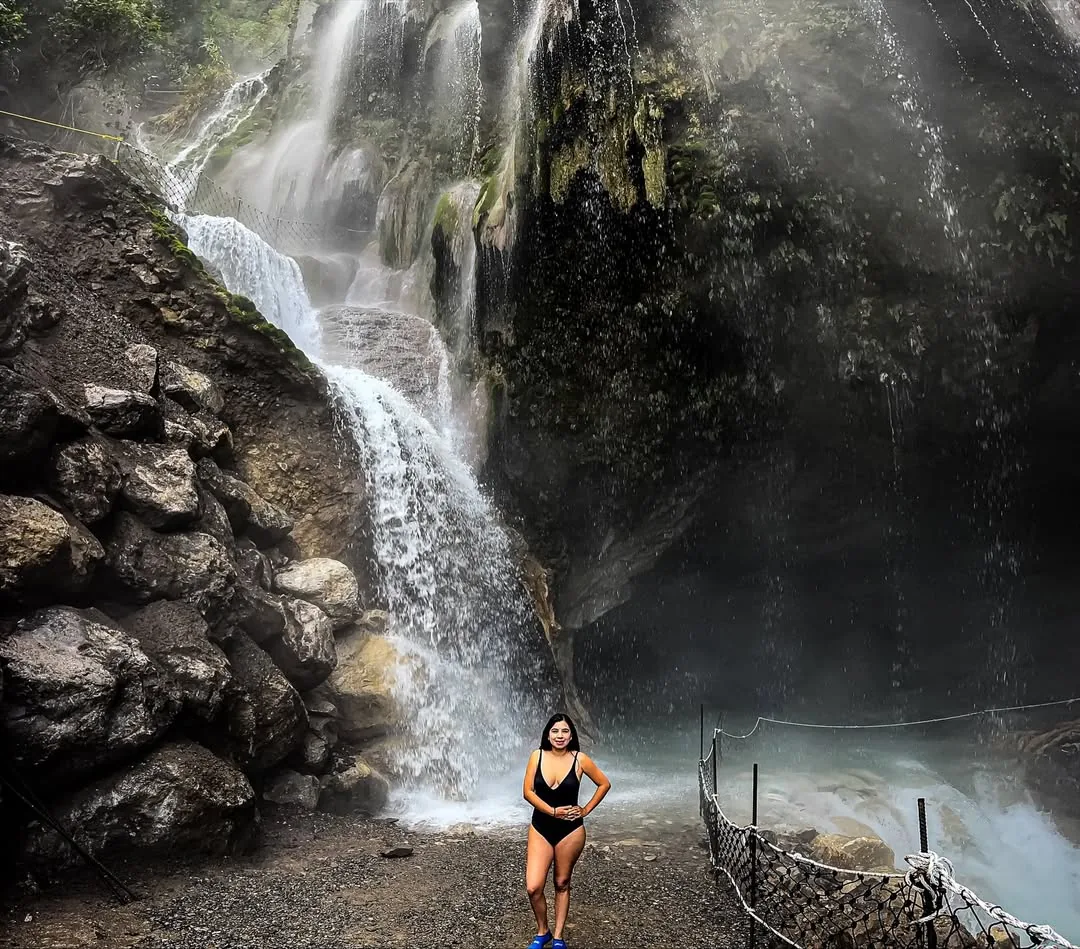
This is the number one risk. Wet limestone, river rocks, pool edges, and grotto floors are extremely slippery. 70% of injuries reported at Tolantongo are from slips: sprained ankles, knee bumps, and, less frequently, fractures.
Prevention: non-slip water shoes with rubber soles are mandatory, not optional. Never walk barefoot or in loose flip-flops in any area of the park. Read our packing list that includes the recommended footwear.
Heat Exhaustion
Thermal water at 36-38°C (97-100°F) gradually raises body temperature. After 30-40 minutes of continuous immersion, dizziness, nausea, and weakness can appear. In children and older adults, the safe time drops to 20-25 minutes.
Prevention: maximum sessions of 20-30 minutes, 15-minute breaks outside the water, constant hydration (at least 1.5 liters of water per person per day). Recognize the early signs: red face, excessive sweating, and feeling of weakness.
River Currents
The Tolantongo River has variable currents. In dry season (October to May) they are moderate. In rainy season (June to September) they can be strong and unpredictable. Flash floods from mountain rain are the most serious risk.
Prevention: do not enter the river when it is flooding or turbid. Pay attention to warning signs and park staff instructions. If the administration closes river access, do not try to enter. Floods can double the water level within minutes.
Trail Falls
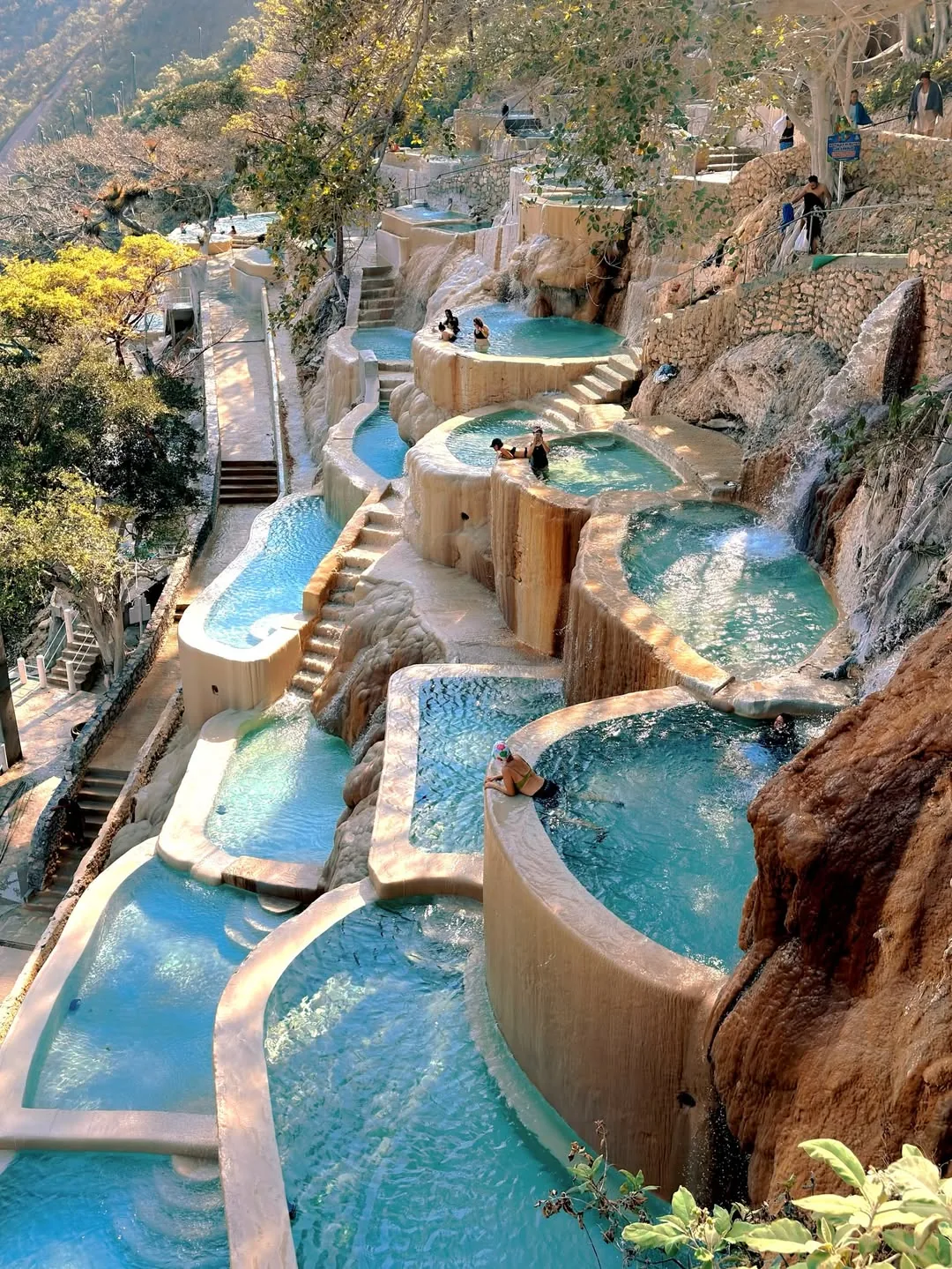
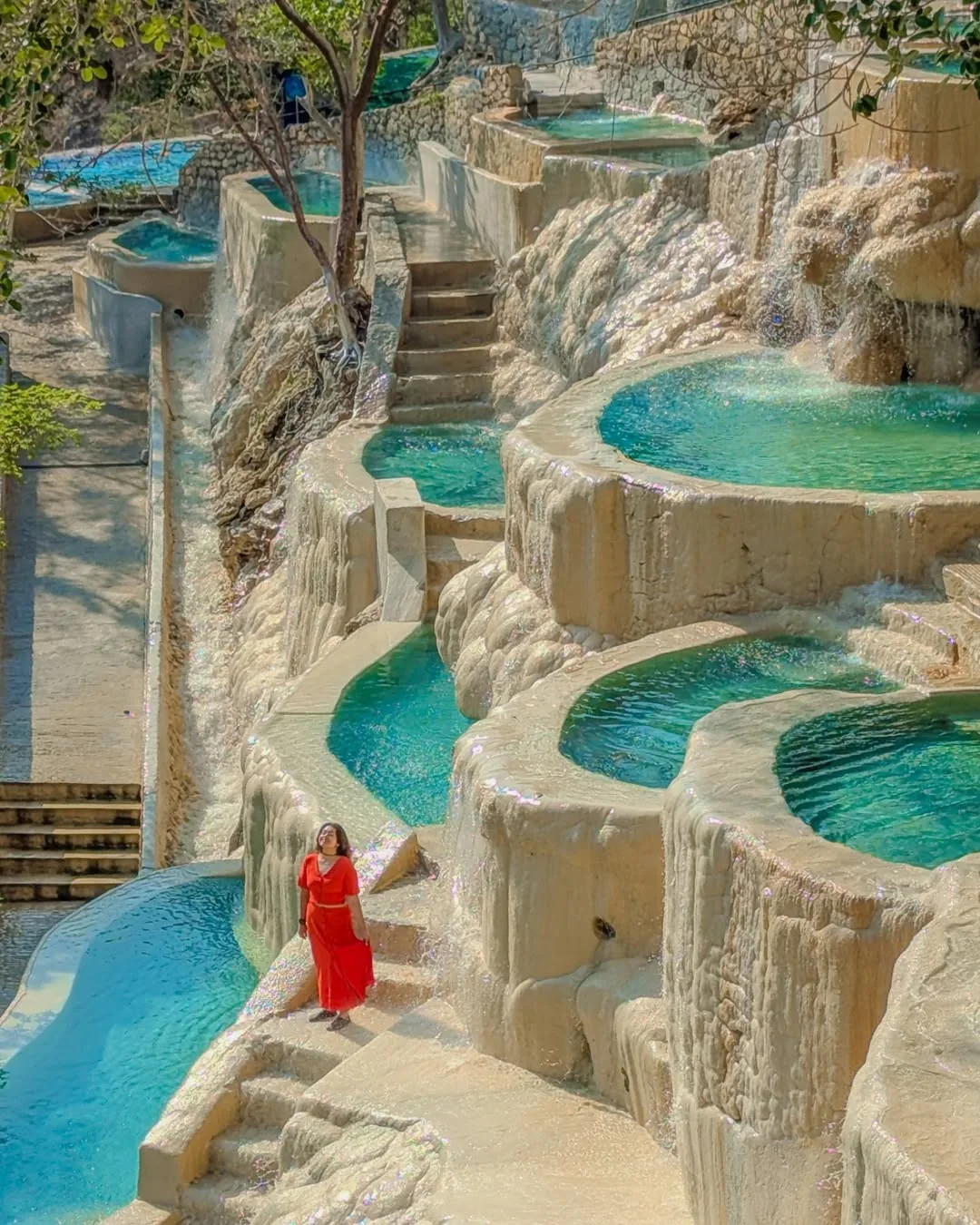
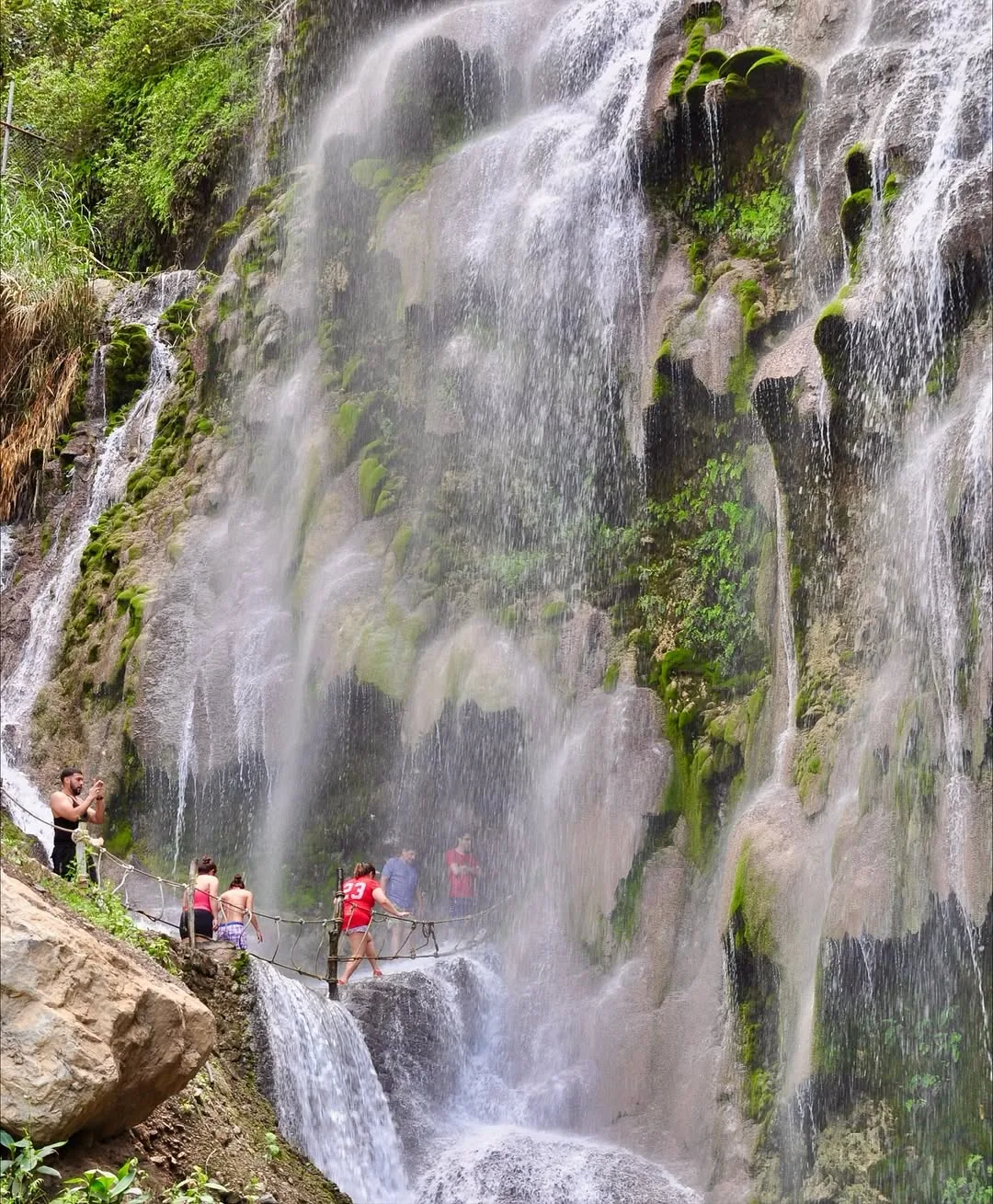
Canyon trails have steep sections, irregular stone steps, and intermittent handrails. Some sections between the terraced pools require climbing and descending natural wet rock steps.
Prevention: walk slowly, use handrails where they exist, and carry a flashlight if walking at dusk. Do not run on any trail, especially those bordering the terraced pools.
Variable Pool Depth
The terraced pools do not have uniform depth. Some are 40 cm and the next may be 90 cm. Underwater edges are not always visible. A misstep can mean unexpectedly sinking.
Prevention: advance slowly when entering each pool. Test the depth with your feet before walking. Supervise children at all times, especially if they move between pools. Check our Tolantongo with kids guide for zone-specific recommendations.
What Happens If You Have a Medical Emergency at Tolantongo?
Inside Tolantongo there is a first-aid station that treats minor injuries. For serious emergencies, transport to the Ixmiquilpan General Hospital takes 40 minutes by road. There is no permanent ambulance or cell phone signal to call 911.
This is the most important safety aspect to understand before visiting: Tolantongo is isolated. The lack of cell phone signal means you cannot call 911. The nearest hospital is 40 minutes away on a mountain road. If someone needs emergency medical attention (heart attack, severe fracture, severe allergic reaction), response time will be at least 1 hour.
Available medical resources:
| Resource | Location | Distance | Service |
|---|---|---|---|
| First-aid station | Inside the park | 0 km | Wound care, bandaging, stabilization |
| San Cristobal Health Center | San Cristobal community | 5 km (10 min) | Basic consultation |
| Ixmiquilpan General Hospital | Ixmiquilpan, Hidalgo | 38 km (40 min) | Full emergency services |
| IMSS Hospital Ixmiquilpan | Ixmiquilpan, Hidalgo | 39 km (42 min) | Emergency services (insured patients) |
Emergency phone numbers (write these down before losing signal):
- General emergencies: 911 (only works with signal, outside the canyon)
- Ixmiquilpan General Hospital: 759 723 0535
- Ixmiquilpan Civil Protection: 759 723 0117
- Ixmiquilpan Red Cross: 759 723 0587
- Park administration: contact available at the entrance
What to do in an emergency:
- Find park staff. Guards in orange vests are stationed in the main areas. They have internal radio communication and can coordinate transport.
- Go to the first-aid station. It is signposted and located near the parking area.
- To call 911: you need to leave the canyon and drive up the road approximately 15-20 minutes to regain signal. Park staff can point you to the exact spot.
- Self-transport: if you have a vehicle, driving directly to the Ixmiquilpan General Hospital is the fastest option for serious emergencies.
Recommended first-aid kit: bring personal medications, pain relievers, adhesive bandages, antiseptic, antihistamines (for allergic reactions), oral rehydration salts, and a thermometer. If someone in your group has severe allergies, carry an epinephrine auto-injector.
What Is Social Security Like in the Tolantongo Area?
The Tolantongo area and the Ixmiquilpan region of Hidalgo have low crime rates compared to the national average. The most reported incidents are minor thefts (forgotten belongings), not muggings or violent robberies.
Tolantongo is operated by the Hnahnu indigenous community of San Cristobal, a cooperative of approximately 280 families who depend economically on tourism. This community structure creates an environment where visitor safety is a direct priority for the residents, since their livelihood depends on tourists returning and recommending the destination.
Regional security data:
- Ixmiquilpan and its communities register violent crime rates below the Hidalgo state average, which in turn is one of the safest states in Mexico according to INEGI data.
- There are no public records of road muggings on the access road to Tolantongo in recent years.
- Incidents inside the park are predominantly accidents (slips, heat stroke), not crimes.
Standard precautions:
- Do not leave valuables visible inside your car (phones, bags, cameras on the seat).
- Use the park’s storage service if you are carrying valuables.
- Only carry the cash you plan to spend that day. Keep the rest in your car’s trunk or in your cabin.
- Do not wear jewelry to the park (besides the loss risk, mineral water can tarnish metals).
The San Cristobal community has a visible presence throughout the park. Local workers (ticket booth operators, guards, cleaning staff, cooks) know every visitor by sight and maintain an organic level of surveillance that proves effective.
What Natural Risks Should You Consider?
Natural risks at Tolantongo include river flooding during rainy season, landslides on the road, rockfall in the canyon, and torrential rains that can temporarily close facilities.
River Flooding
The most serious natural risk. When heavy rain falls in the mountains (30-50 km upstream), water reaches the canyon with a delay of 2 to 4 hours. This means it can be sunny at Tolantongo and still receive a flood from distant rains. The river can go from 30 cm deep to more than 1.5 meters in less than 30 minutes.
The park administration monitors river levels and closes access when risk is detected. If you hear an alarm or see staff asking visitors to leave the river, obey immediately. Between July and September, 3 to 5 closures per season occur.
Landslides
During rainy season, the access road may have minor landslides (rocks, mud) partially blocking one lane. These are generally cleared within 24 hours. In exceptional cases, a major landslide can close the road for 1-3 days.
Rockfall
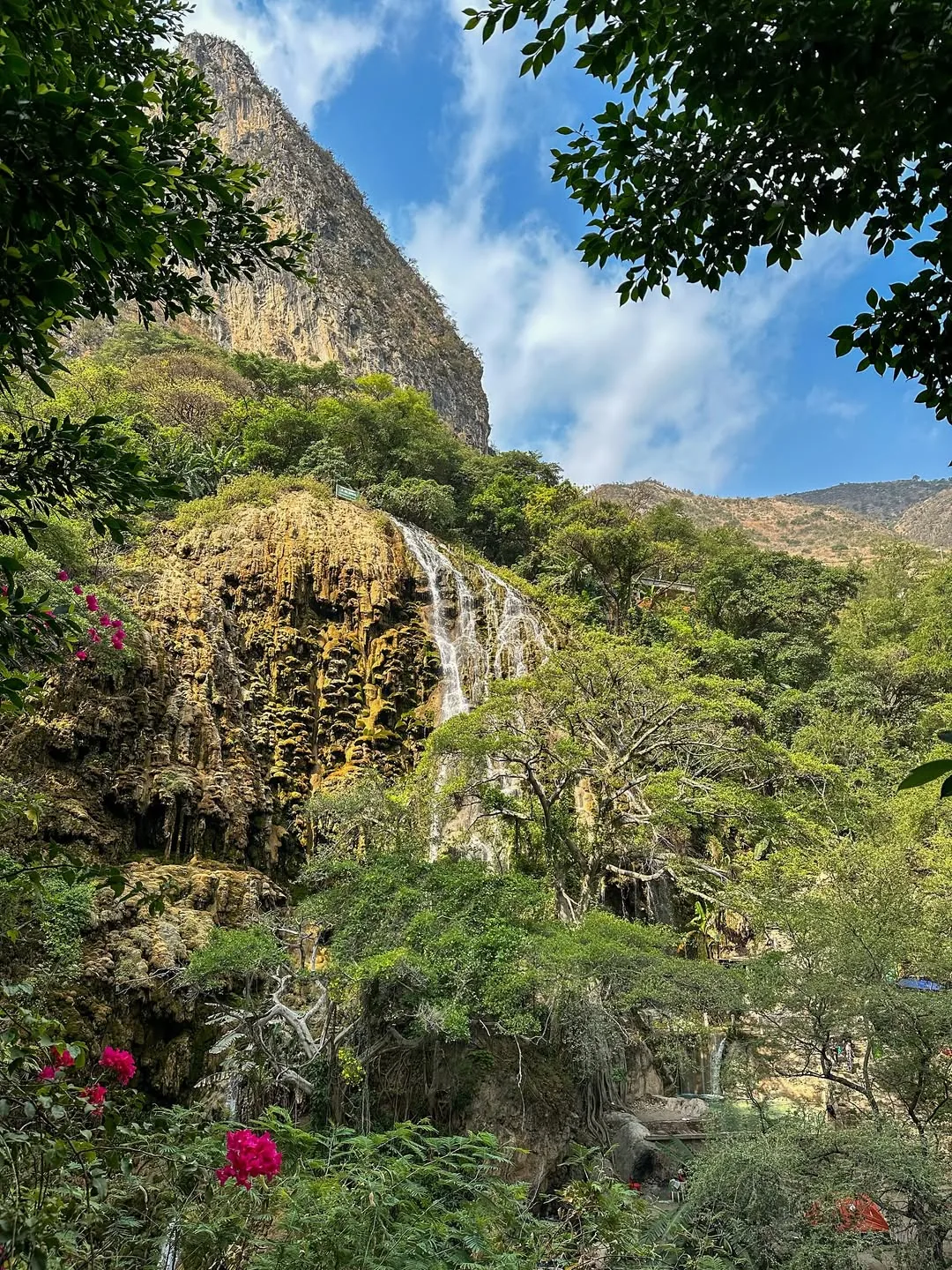
The canyon has limestone walls that occasionally shed fragments. It is infrequent but possible. Do not camp or linger directly beneath the canyon’s vertical walls. The pool and cabin areas are located in zones assessed as safe.
Seismic Activity
Hidalgo is not a high seismic activity zone, but strong earthquakes originating in Guerrero, Oaxaca, or Puebla can be felt. Inside a canyon, the protocol during an earthquake is to move away from rock walls and slopes, go to an open space, and wait for park staff to give instructions.
What Precautions Should Solo Travelers Take at Tolantongo?
Traveling solo to Tolantongo is safe but requires additional precautions: tell someone your itinerary (you will lose signal), carry a personal first-aid kit, do not explore isolated trails at night, and stay overnight inside the park if you plan to stay late.
Solo travel to Tolantongo is increasingly popular, especially among women travelers and digital nomads. The community that operates the park is welcoming and the general atmosphere is family-friendly and calm. However, traveling solo always means there is no one to call for help if something happens to you.
10 precautions for solo travelers:
- Share your complete itinerary with someone you trust before losing signal: departure time, route, estimated arrival time, return time.
- Travel during the day. Do not drive the mountain section at night, especially if it is your first time.
- Carry a complete first-aid kit. Without a travel companion, nobody will have the aspirin you need.
- Do not explore isolated trails alone at night. Canyon trails have no lighting outside the main areas.
- Stay inside the park. If you plan to stay until late afternoon or night, a cabin or camping is safer than driving back on the mountain road at night.
- Socialize at the pools. Mexicans are sociable. Make conversation with nearby families or groups. In case of emergency, you will have someone who knows you are there.
- Carry identification (ID or passport) and your medical insurance information in an accessible, dry place.
- Park your car facing the exit, so you can leave quickly if needed.
- Take photos of the safety signs and park map upon entering, so you have them available without signal.
- Trust your instincts. If something does not feel right, leave the situation. Park staff are approachable and respond to any concern.
How to Prepare for No Cell Phone Signal?
Prepare before losing signal: download offline maps of the entire route, write emergency phone numbers on paper, tell someone your schedule, and carry a fully charged portable battery for using your phone’s flashlight and camera without worry.
The absence of cell phone signal is the safety factor that most surprises first-time visitors. There is no signal from Telcel, AT&T, Movistar, or any other carrier inside the canyon. Signal drops around kilometer 20 of the mountain road, roughly 15-20 minutes before reaching the park.
Preparation checklist (do this before losing signal):
- Download the complete route map on Google Maps (offline mode)
- Download an alternative map on Waze or Maps.me
- Write emergency phone numbers listed in this guide on paper
- Send your real-time location to a trusted contact (it will stop when signal drops, but it will record your last position)
- Save the park’s phone number on your phone
- Charge your portable battery to 100%
- Tell your trusted contact your estimated return time
- Take a screenshot of the route in case the offline map fails
Inside the park: the administrative staff have a landline phone and radio. If you need to make an emergency call, go to the administrative offices near the entrance. For non-urgent calls, you will need to drive up the road until you regain signal.
When leaving: signal gradually returns as you climb the road. Approximately 20 minutes after leaving the park you will have enough signal to make calls and send messages. Your trusted contact will receive any messages you sent without signal once the connection is restored.
The lack of signal has a positive side: you disconnect completely from the digital world and immerse yourself in the natural experience. Many visitors report that the disconnection was one of the most valuable aspects of their visit. But for that disconnection to be pleasant rather than anxiety-inducing, prior preparation is essential.
Tolantongo is a safe destination that requires conscious preparation. The risks are not from social insecurity but from physical and geographic factors: mountain road, slippery surfaces, hot thermal water, and isolation without cell phone signal. With the precautions in this guide, the right shoes, and a bit of common sense, your visit will be memorable for all the right reasons.
Frequently asked questions
Is the road to Tolantongo dangerous?
The road to Tolantongo has mountain sections with tight curves and steep grades, but it is paved for most of its length. The main risks are unguarded curves and nighttime fog. It is recommended to travel during the day, respect the 40 km/h speed limit in the mountain zone, and never pass on curves.
Is there medical service inside Tolantongo?
Inside Tolantongo there is a first-aid station with basic staff to treat minor injuries like scrapes, bumps, and slips. For serious emergencies, transport to the Ixmiquilpan General Hospital is required, which is 40 minutes away by road. There is no permanent ambulance inside the park.
Are there robberies or muggings at Tolantongo?
Tolantongo is a destination with low crime rates. The most reported incidents are minor thefts in rest areas (forgotten phones, wallets). There are no significant records of road muggings or robberies inside the park. It is recommended not to leave valuables visible in your car.
Is there cell phone signal at Tolantongo?
There is no cell phone signal from any carrier inside the Tolantongo canyon. Signal drops approximately 20 minutes before arrival. This means you cannot make calls, send messages, or use mobile data. Download offline maps before losing signal and write down emergency phone numbers.